On October 3, 2026, the Alameda County Office of Education brought together expanded learning leaders for a thoughtful and engaging Region 4 Expanded Learning Summit, creating opportunities to learn from practitioners, exchange ideas, and strengthen connections across the field.

This article reports on one of the excellent presentations called “Building Thriving Futures: Findings from Community Schools & Expanded Learning in San Mateo County”. Across three parts of the presentation, Dr. Ron Campana of San Mateo County Office of Education, Ms. Elizabeth Calderon-Garcia of Redwood City School District, and Ms. Jeannette Ramirez of San Mateo-Foster City School District showed how community schools and expanded learning can work together through stronger alignment, district coordination, community leadership, strategic partnerships, and shared learning.
Integration and Alignment Across the Whole Student Experience
Dr. Ron Campana focused on the Community School Framework and the role expanded learning plays within it.
Students’ opportunities and needs extend beyond the traditional school day. There is before school, after school, and, for some students, programming into the evening. Campana emphasized the importance of integrating those opportunities into the broader framework supporting students.
That raises an important question about who coordinates the work. Campana asked:
“Is it the school day? Is expanded learning? Because if it’s one or the other, that’s a problem. It needs to cover everything.”
He identified what he considered the most important piece: “integration alignment.”
That alignment begins with understanding what a school already has and what it needs. Needs and assets assessments, community school coordinators, advisory structures, and existing resources all contribute to building a more connected approach.
Campana later extended that principle to the county’s role. Effective support begins with understanding what districts and programs need while making sure they know what support is available. He described that relationship as a “two-way street.”
Because districts are at different stages, support cannot look the same everywhere. SMCOE provides personalized technical assistance through coaching, needs and assets assessments, check-ins, training, resources, and connections to other practitioners.
“We are not the experts in all the work. We’re here to learn, just like you guys.”
Through its Community Learning Network, communities of practice, and other opportunities to connect, the county helps practitioners learn from one another, strengthen collaboration and shared accountability, and avoid working in isolation.

Turning Coordination Into District Practice
Elizabeth Calderon-Garcia, Director of Community Schools and Partnerships at Redwood City School District, showed what coordinated implementation can look like within a district.
In RCSD, Community Schools, Expanded Learning, and Mental Health are housed within the same department. But the structure alone is not what connects the work. Dedicated coordination, strong partnerships, communication, feedback, and continuous improvement make that structure operational.

At the district level, a coordinator of extended learning brings program directors together each month to set expectations, discuss upcoming needs and potential partnerships, and share successful practices. Calderon-Garcia described this as creating a “network of support.”
At school sites, community school coordinators meet regularly with expanded learning programs, visit classrooms, support students and families, and connect expanded learning with what students experience during the school day.
As Calderon-Garcia explained:
“Expanded learning is an extension of the school day. It should not be something separate.”
Partnerships are approached with the same intentionality. Some opportunities may make sense across the district, while others need to reflect the needs of an individual school and what its students want. That means asking not only which partners to bring in, but who will manage those relationships, how partners will be vetted, and how expectations will be established.
Data and feedback keep the work moving forward. RCSD uses site visits, walkthroughs, program-quality information, and direct feedback to identify strengths and areas for growth. Coaching gives expanded learning staff additional support in areas such as lesson planning, classroom management, transitions, and responding to student needs.
School leadership matters, too. Calderon-Garcia emphasized that principals need to understand what happens in expanded learning, visit programs, and advocate for the staff serving their students. When school leaders, district staff, and expanded learning partners share expectations and communicate consistently, expanded learning becomes part of the school community rather than something separate from it.
From Community Needs to Leadership and Strategic Partnerships
Jeannette Ramirez of San Mateo-Foster City School District showed how leadership, data, and community voice can guide decisions about resources and partnerships.
Her district began with a strategic plan centered on academics, wellness, and equity. That shared vision became a north star as the district developed its community school work.
Attendance was one priority, but Ramirez pushed the conversation beyond whether students were simply showing up:
“Why are they not coming? What are they needing? What is the family needing?”
The district looks at attendance and belonging alongside what parents, staff, and students are saying. By slowing down to examine the data and identify gaps, leaders can better understand where support is needed.
From there, the work moves into asset mapping and gap analysis: identifying resources already present in the community, understanding what is missing, and developing strategic partnerships that respond to those needs.

But Ramirez emphasized that leadership does not come only from organizations outside the school system. Students and families themselves are community assets.
She shared the example of a student who began collecting donated school uniforms as a third grader. The effort grew to support additional schools and continued as the student got older, with his younger brother later carrying the work forward.
For Ramirez, the example illustrated something larger: community schools can create opportunities to grow leadership within students and families so they become active participants in strengthening their communities.
That same principle is built into the district’s decision-making structures.
“You cannot do this alone.”
Site and district steering committees bring together parents, students, administrators, classified and certificated staff, and community partners. Community school specialists help connect those voices at school sites, while surveys and empathy interviews help leaders understand needs as they change.
Information moves between schools and the district rather than only from the top down. The people closest to students and families help identify needs, connect resources, and shape the work.
Ramirez’s final message followed naturally from that approach: let those closest to the work help tell its story.
“Share your story. Be an advocate for your kids and your families.”
When Districts Learn From One Another
The three perspectives came together around another important part of the work: learning across organizational boundaries.
Calderon-Garcia described how Redwood City, with more than 25 years of experience with community schools, supported neighboring San Mateo-Foster City as it began developing its approach. Staff shared what implementation had looked like, including challenges they had encountered and lessons they had learned.
Hearing directly from people who had already experienced the work helped make change more tangible. And the relationship became reciprocal. Calderon-Garcia described being able to turn to Ramirez and her team as part of that network as well.
Campana connected that experience to the county’s role. The value of training and communities of practice is not simply that the county teaches districts what to do. Practitioners can learn directly from one another, share what has worked, and build a broader community of support.
The same collaborative thinking applies to resources.
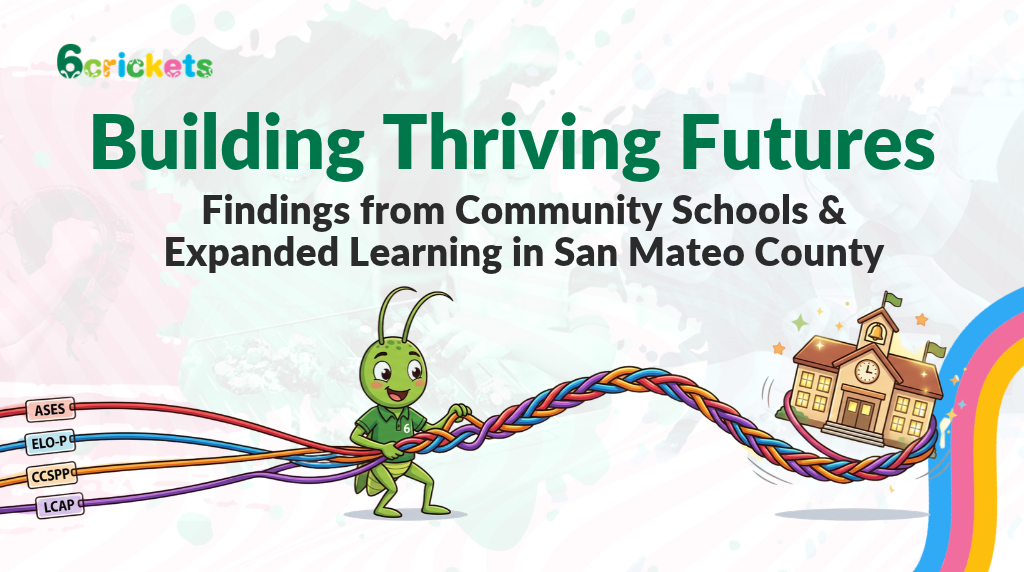
Calderon-Garcia emphasized the importance of blending and braiding funding. She explained that RCSD sustains its district team by bringing together resources from ASES, ELO-P, CCSPP, and LCAP.
The purpose is not simply to combine funding streams. It is to create the team and infrastructure needed to support staff, who in turn support students and families.
Ramirez reinforced the importance of braiding and connected it to her district’s own experience with change. When San Mateo-Foster City School District encountered resistance, learning alongside a neighboring district with experience in community schools helped people see what the work could look like in practice. Over time, that shared learning helped build knowledge and trust.
The Big Takeaway
Campana, Calderon-Garcia, and Ramirez approached the work from different positions, but their perspectives reinforced one another.
Campana showed why community schools and expanded learning need integration and alignment across the whole student experience, supported by networks that respond to what districts need.
Calderon-Garcia showed how districts can turn that alignment into practice through dedicated coordination, intentional partnerships, communication, monitoring, coaching, and continuous improvement.
Ramirez showed how shared vision, data, community leadership, asset mapping, and strategic partnerships can keep the work grounded in the changing needs of students and families.
Together, their experiences point to a practical lesson: blending and braiding resources, while bringing the management of expanded learning and community schools into closer alignment, can help districts use their people, partnerships, and resources more strategically to support students and families.
The presentation closed by turning the reflection back to the leaders in the room:
“Where are you? Where would you like to be? And who are you bringing along?”
Contact Us
Connecting expanded learning across schools and community partners takes coordination among the people, programs, and resources supporting students and families.
6crickets helps districts manage expanded learning across schools and community partners, giving leaders the systems they need to coordinate programs and support the people doing the work.
Contact us to learn how 6crickets can support your district’s expanded learning programs.
 info@6crickets.com | [Schedule a conversation]
Yours in Education,
6crickets Team